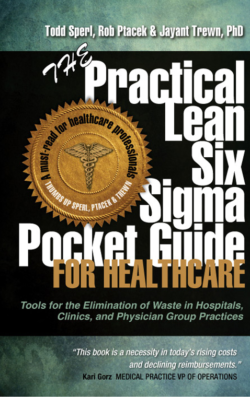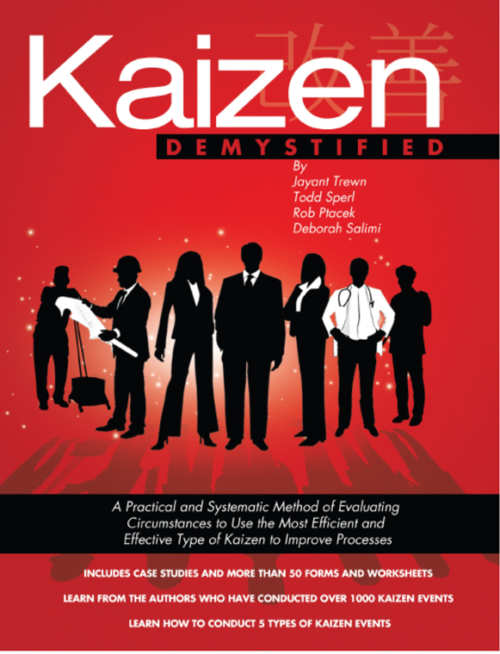
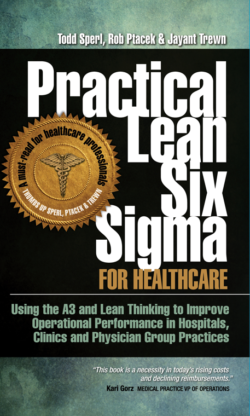
By: Todd Sperl, Rob Ptacek, Jayant Trewn (PhD)
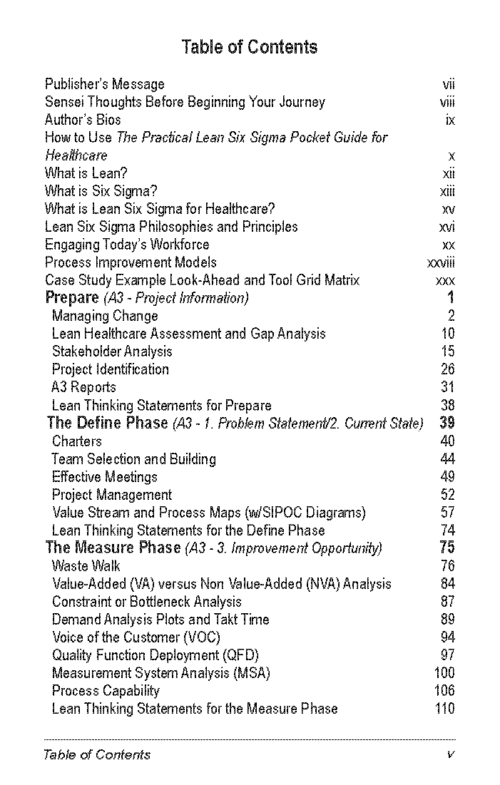
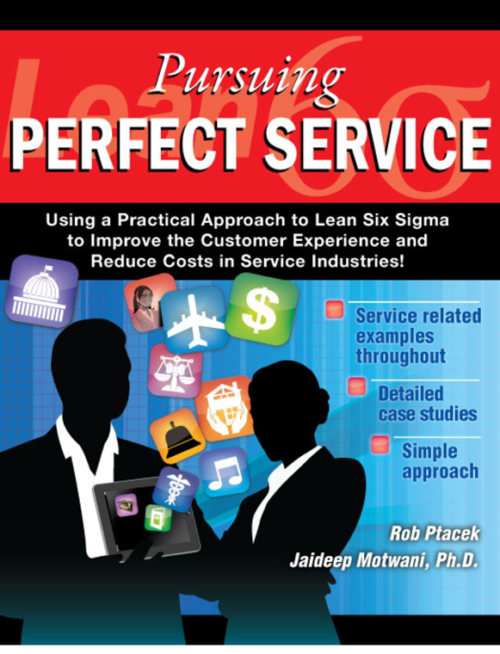
NOTE: This book in on backorder. Orders placed today will ship Monday, September 4th, 2023. We will upgrade the shipping at no additional cost. This book bridges the gap between a highly quantitative analysis of a process that requires extensive training (i.e., Six Sigma certification) and a more simplified approach that can be used and understood by the masses (i.e., Lean thinking). The goal of this book is to make the methods and tools of Lean and Six Sigma accessible to more people and provide a common sense or “practical” approach to problem solving and continuous improvement. This book is intended to be used by Sigma Belt Levels, Lean Senseis (i.e., teachers), Continuous Improvement Specialists, front-line managers, and supervisors of departments and work groups, and improvement team members in their efforts to improve the patient care experience while reducing waste and variation in all types of healthcare processes. The Lean Six Sigma tools and concepts are presented relative to the A3 road map to provide a definitive how-to guide to problem solving and continuous improvement (Kaizen) initiatives.
NOTE: This book in on backorder. Orders placed today will ship Monday, September 4th, 2023. We will upgrade the shipping at no additional cost. This book bridges the gap between a highly quantitative analysis of a process that requires extensive training (i.e., Six Sigma certification) and a more simplified approach that can be used and understood by the masses (i.e., Lean thinking). The goal of this book is to make the methods and tools of Lean and Six Sigma accessible to more people and provide a common sense or “practical” approach to problem solving and continuous improvement. This book is intended to be used by Sigma Belt Levels, Lean Senseis (i.e., teachers), Continuous Improvement Specialists, front-line managers, and supervisors of departments and work groups, and improvement team members in their efforts to improve the patient care experience while reducing waste and variation in all types of healthcare processes. The Lean Six Sigma tools and concepts are presented relative to the A3 road map to provide a definitive how-to guide to problem solving and continuous improvement (Kaizen) initiatives.